
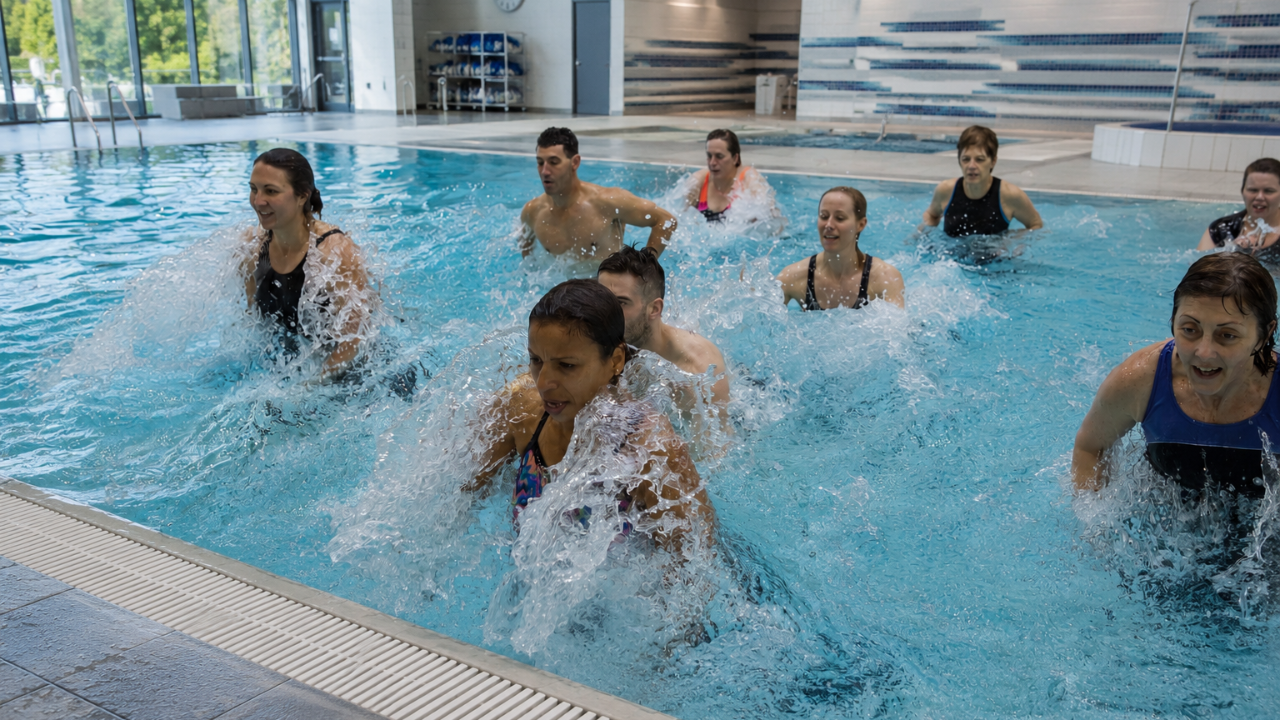
Power Is Not Just for Athletes
Jun 11, 2026When most people hear the word "power," they picture a sprinter exploding out of the blocks or a weightlifter driving a barbell overhead. Power training gets filed away as something elite, something separate from the work happening in community fitness classes, group exercise studios, and aqua sessions.
Let's challenge this bias.
Power is a functional quality that every person uses every day, and it belongs in every well-rounded fitness program. The question for most aqua instructors is not whether they believe in training it. It is whether they can see it clearly enough in their sessions to know if it is actually happening.
What Power Actually Means
In simple terms, power is the ability to produce force quickly. Strength is part of it, but the speed of that force production is what separates power from general fitness. It is about being strong fast enough to matter.
Think about the movements that keep people functional and confident in daily life. Catching yourself before a fall. Getting out of a chair in one smooth push. Stepping off a curb without hesitation. Reacting when something unexpected happens. These movements all require the nervous system and the muscles to work together at speed, and that combination is exactly what power training develops.
Strength training builds capacity. Power training teaches the body to use that capacity when it counts.
Why Power Gets Missed in Aqua Sessions
Most aqua instructors are already running physically demanding sessions. Participants are working hard, heart rates are up, muscles are fatigued by the end. It is easy to assume that power is somewhere in that mix.
But effort and power are different things. A session built around sustained cardio output and muscular endurance can feel intense without ever training the rapid force production that defines power. If your participants are always moving at a moderate, controlled pace, the power demand is low regardless of how tired they feel.
Power requires speed and intent. A movement needs to be genuinely fast, and the person performing it needs to be consciously trying to accelerate, not just keeping up with the tempo of the class. Without those two ingredients, what you have is a good conditioning session. What you do not yet have is power training.
That distinction is worth knowing, because it changes how you design and coach your sets.
Why Power Applies to Everyone
Power is relevant across every population and every age group in your classes.
For younger and active participants, it underpins athletic performance, sport-specific movement, and the ability to change direction, accelerate, and react quickly. These are qualities that deteriorate without deliberate training, regardless of how fit someone is overall.
For everyday movers, power is what allows the body to respond when something unexpected happens. A stumble on the footpath, a sudden stop, a quick sidestep. These are not strength events. They are speed events, and the body needs to have trained that quality to draw on it reliably.
For older adults specifically, power declines faster than strength as part of the ageing process. That gap has real consequences for balance recovery, stepping strategies, and confidence in movement. But framing power training as something only relevant to ageing populations misses the point. Building and maintaining power is useful at every stage of life, and the aqua environment gives you a practical way to train it across all of them.
Why the Pool Is a Genuinely Useful Place to Train Power
You already know the water works. This is not about convincing you of that. It is about expanding how you see what the pool can do for this specific training quality.
Water provides resistance in every direction. Unlike a cable machine or a resistance band, which load a movement in one plane, water pushes back against acceleration regardless of which way you move. Every push-off, every change of direction, every acceleration in the pool is working against resistance that scales automatically with effort. The harder and faster the participant moves, the greater the load. That is a training environment with built-in progressive overload, and it requires no equipment adjustment.
The buoyancy of water also reduces joint load, which means participants can train speed and acceleration at an intensity that would be harder to sustain on land. More volume, faster recovery between efforts, and less wear on the joints. That is an advantage for every participant in the pool, not just those managing injury or joint conditions.
The water also gives honest feedback on movement quality. Sloppy mechanics generate drag and slow the person down. When a participant feels the difference between a crisp, well-executed push-off and a lazy one, the water has done some of the coaching for you. That sensory feedback is a useful teaching tool.
The pool works alongside land-based training as a smart environment for power development, and it offers more range than most programs currently use it for.
An Expert Insight Worth Sitting With
Power training is often confused with simply working harder. Add more resistance, move more weight, push through more fatigue. But power development depends on three things that pull against that instinct: speed, intent, and recovery.
The speed component means the movement itself needs to be genuinely fast to train the rapid force production pathway. The intent component means the participant needs to be consciously trying to accelerate, not just completing a repetition at whatever pace feels comfortable. The recovery component means protecting the quality of each effort, which requires adequate rest between sets.
When instructors understand that distinction, session design changes. You stop filling every gap with more work and start giving each power set the conditions it needs to actually deliver the training effect you are after.
Learn to Coach Power at Aqua Immersion 2026
Understanding power is one thing. Knowing how to build it deliberately into a session, coach it with clear cues, and programme it so the training effect actually lands is another.
That is exactly what Melissa Plumeau covers in Aqua Power: High Performance Training, one of the sessions at the Aqua Immersion Virtual Conference on 13 September 2026.
Melissa is an Aquatic Training Specialist and national presenter with over 20 years of experience. In this session she will walk you through practical, ready-to-use drills for acceleration, push-offs, and changes of direction, along with simple programming ideas and coaching cues you can take straight into your next class. You will leave knowing how to run sessions that feel athletic, purposeful, and performance-driven, and how to tell the difference between a session that trains power and one that only looks like it does.
The Aqua Immersion conference also includes sessions on music use, brain training, deep-water wall intervals, and movement preparation for instructors. Six AusActive CECs, 8.5 REPs NZ CPDs, and 30 FitRec points are on offer for attending.
Early bird pricing is available until 11 August. Lifetime access to recordings is included, so you can revisit the content whenever you need it.
If power has been missing from your programming, or you have been unsure how to coach it with confidence, this is a practical, focused session worth your time.
Sign up for free education!
Unlock the power of music in group fitness and enhance your teaching skills - sign up now for two free webinars and elevate your fitness instruction!
We hate SPAM. We will never sell your information, for any reason.
