
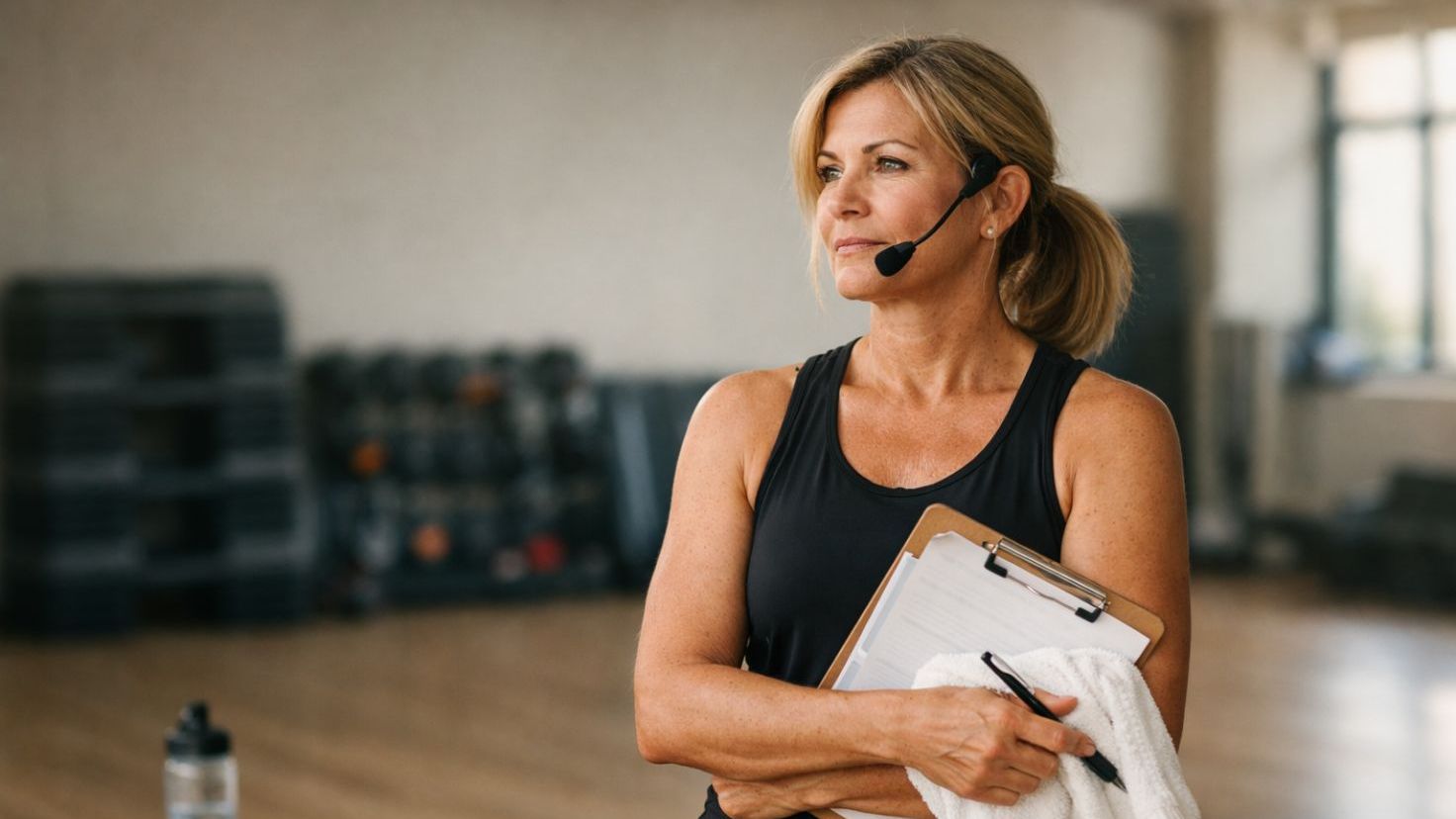
Why General Menopause Advice Doesn’t Work for Instructors
Mar 25, 2026Most menopause advice is written for the general population. It is designed for women who might exercise a few times a week, who can adjust their schedule when they feel tired, and who can prioritise rest without it affecting their income or responsibilities.
That is not the reality for a group fitness instructor.
You might be teaching multiple classes a day. You might be demonstrating high-repetition movements, managing intensity, cueing clearly, and motivating your participants, even when your own energy feels low. Your workload is not optional. It is structured, consistent, and physically demanding. And this is exactly why general advice does not work for group fitness instructors.
When the body starts to change through perimenopause and menopause, the demands of teaching do not change with it. That mismatch is where many instructors begin to feel the strain.
When Your Body Is Your Work
For an instructor, the body is something you rely on every day to do your job well.
You are demonstrating exercises, using energy to cue clearly, and motivating your participants from beginning to end. There is a cognitive demand as well as a physical one. You need to think clearly, communicate well, and keep the class moving.
During perimenopause and menopause, this becomes more complex.
Dr Wendy Sweet explains that many instructors begin to notice changes not only in how their body feels, but in how it responds to the same teaching schedule they have managed for years. You may feel more breathless than usual. Your muscles may fatigue more quickly. Recovery between classes may take longer. Sleep may become disrupted, which then affects your energy before you even walk into the studio.
The classes have not changed. Your timetable has not changed. The expectation to show up and teach well has not changed. But your body’s response to those demands can change, and that is often where confusion and self-doubt begin.
You question if you are losing motivation or are no longer capable. What it actually is, is a sign that your body is responding differently to the same physical demands, and that you need a different level of understanding to support it well.
Is It Just Hormones?
Menopause is often reduced to a conversation about hormones. Estrogen declines, progesterone fluctuates, and from there, symptoms are expected to follow.
But for instructors, this explanation is too limited.
What matters more is understanding how those hormonal changes affect the entire body. As Wendy explains, menopause impacts multiple systems at once. It affects muscles, joints, cardiovascular function, as well as gut and liver health. These systems are all involved in how you generate energy, how you recover, and how you tolerate physical load.
When these systems shift, your experience of teaching shifts with them.
This is why many instructors fee, “nothing has changed, but everything feels different.”
Muscle Function Changes
One of the most noticeable changes is in muscle function.
As estrogen levels decline, there is an impact on muscle repair, strength, and overall resilience. This does not mean you suddenly lose your ability to teach or demonstrate, but it does mean that the cost of doing so increases.
You may find that soreness lasts longer than it used to. You may notice that high-repetition work feels more taxing, or that your ability to sustain intensity across multiple classes in a day is reduced.
For someone teaching occasionally, this might be manageable. For an instructor teaching regularly, it accumulates quickly.
Nervous System and Fatigue
Alongside muscular changes, there is a shift in how the nervous system responds to stress.
Perimenopause often brings a heightened sensitivity in the stress response system. This is commonly linked to what is known as the HPA axis, which regulates how the body responds to physical and psychological load.
For instructors, this matters because your job includes both.
You are not only physically active, but you are also managing people, environments, and expectations. Over time, this can lead to a pattern where you feel both exhausted and overstimulated at the same time. Many describe it as feeling “wired but tired.”
It is not your motivation that is the issue; it is that your body is responding differently to the same physical demands.
Sleep Disruption and Recovery
Sleep is one of the most significant factors affecting instructors during menopause.
Changes in hormonal patterns can disrupt both the quality and consistency of sleep. You may wake during the night, struggle to fall back asleep, or find that your sleep is lighter and less restorative.
For someone with a standard routine, this is challenging. For an instructor with early starts, late finishes, and limited recovery windows, it becomes critical.
Sleep is where recovery happens. When sleep is disrupted, recovery is compromised. When recovery is compromised, performance is affected.
This is why many instructors begin to feel like they are constantly catching up, but never quite getting there.
A Different Approach Is Needed
General menopause advice does not account for the physical and cognitive demands of teaching.
It does not consider what it means to demonstrate multiple classes a day. It does not address the impact of disrupted sleep on a body that is expected to perform. And it does not provide guidance that reflects the reality of managing a weekly teaching load.
What instructors need instead is a clearer understanding of what is happening inside their body, and how to respond to those changes in a way that supports both their health and their work.
This includes looking beyond hormones alone and taking a more integrated approach. As Wendy emphasises, this means understanding the role of gut health, liver function, nutrition, and recovery in supporting energy and reducing fatigue.
It also means recognising that your body is not failing. It is adapting.
If your body is changing, ignoring it will not make it easier to teach.
The longer you keep second-guessing your fatigue, your recovery, your sleep, and your energy, the harder it becomes to keep showing up the way you want to.
Teaching Through Menopause, Strategies for Group Fitness Instructors gives you the insight and practical strategies to understand what is happening and respond properly.
Click here to register for the workshop and take back control before pushing through turns into burning out.
Sign up for free education!
Unlock the power of music in group fitness and enhance your teaching skills - sign up now for two free webinars and elevate your fitness instruction!
We hate SPAM. We will never sell your information, for any reason.
